
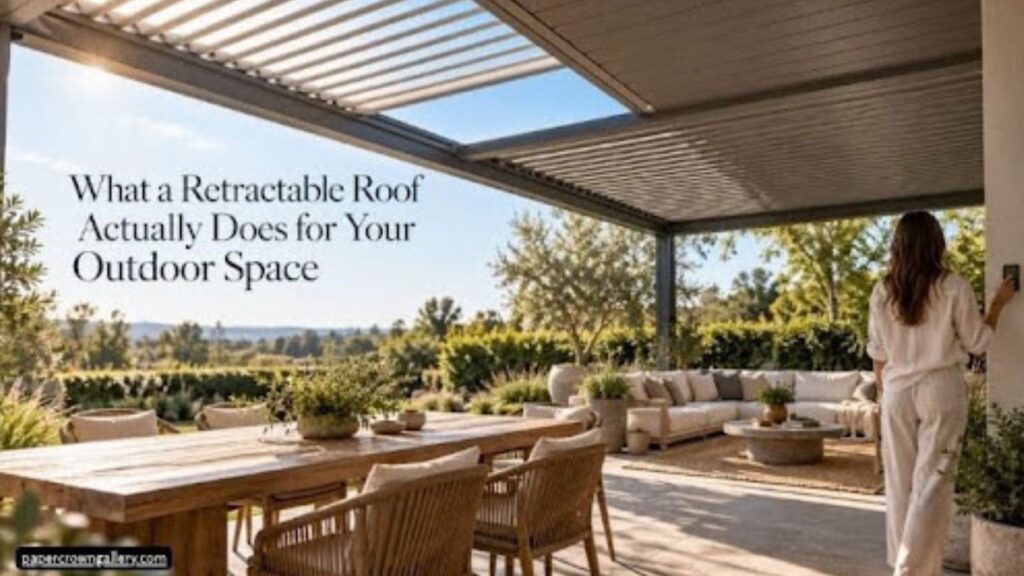
Most homeowners picture two choices for their patio: leave it open to the weather, or cover it permanently and lose the sun entirely. A retractable roof gives you both options by letting you control light, airflow, and coverage without committing to one fixed setup.
That flexibility sounds appealing, but homeowners often want to know how it works in practice. Here at PaperCrownGallery, we’ve heard the same question from hundreds of customers: how much control do you really get once the roof is up?
This guide explains what a retractable roof blocks, what it doesn’t, and how that affects your daily use of the space. It focuses on how the roof works once it’s in your backyard, rather than installation steps. So, if you’re weighing an open patio against a covered one, keep reading.
What a Retractable Roof System Can and Can’t Block
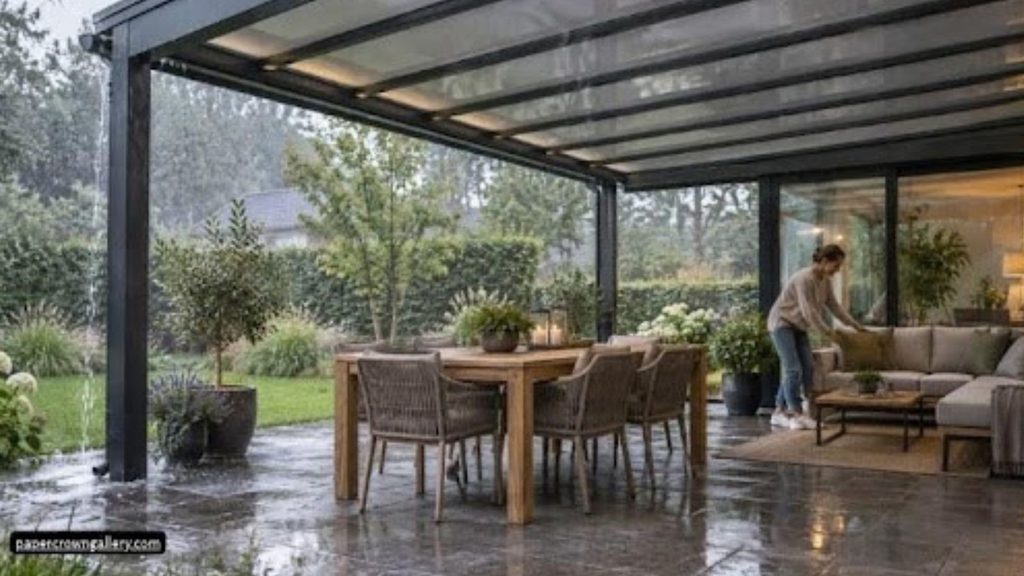
A retractable roof can block direct sunlight and provide some protection from rain, but it can’t fully shield an open patio. How much it blocks depends on the materials, design, and how far the roof closes.
For example, retractable polycarbonate panels let natural light through while keeping rain off the covered area. When closed, their solid surfaces block falling rain and form a weather-resistant covering. Retractable fabric roofs work differently, as their rain protection depends on the fabric’s properties and the system’s design.
Both systems let you uncover the patio when you want more sunlight (handy on the rare day the Chicago sky actually cooperates). However, neither can stop strong winds or sideways rain from entering through the open sides. Even when the roof is fully closed, your patio remains an outdoor space rather than a fully enclosed room.
How a Retractable Roof Controls Sunlight and Shade
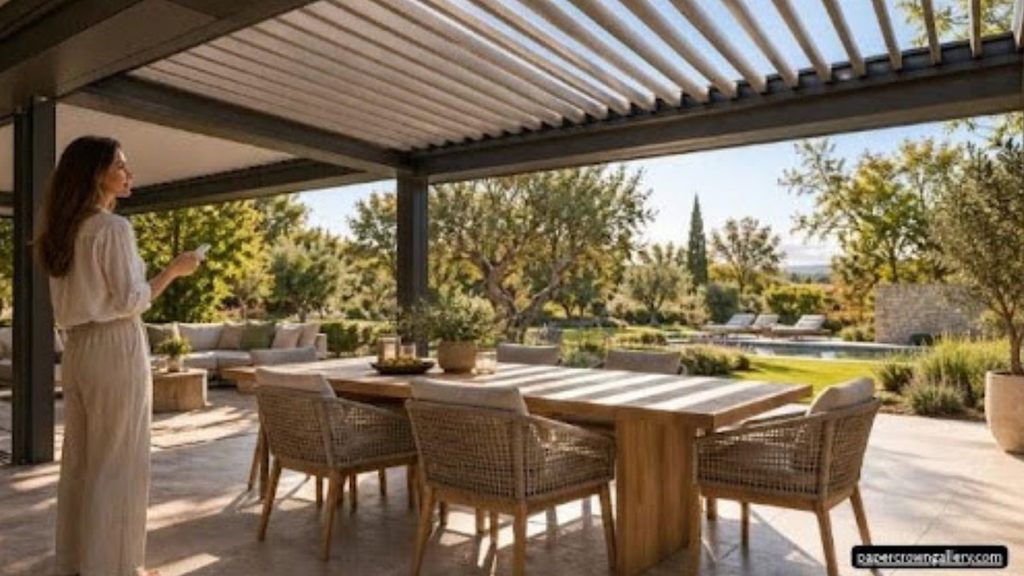
Many adjustable roofs let you choose between direct sunlight, partial shade, and fuller coverage. Fair warning, though: not every retractable roof offers the same level of adjustment, so the UV protection you get depends on the slat angle and material.
Here’s how that range changes the amount of sunlight your patio receives throughout the day.
Shade Without Losing Your View of the Yard
Angled slats on adjustable louvered roofs reduce overhead glare by limiting how much direct sunlight passes between them. The slats sit above the patio, so they don’t obstruct your view through its open sides. You still see the yard, the trees, and whatever your kids left on the lawn (we’ve heard that one before). This setup works well when you want shade while keeping your view of the yard.
Adjusting the Slats to Let Natural Light In
The same slats rotate open to let sunlight back onto the patio, adjusting the coverage gradually rather than all at once. On motorized models, a switch or remote controls the slats, which makes it easy to adjust the shade several times a day. You can change the amount of sunlight as easily as you’d adjust a thermostat.
Does a Retractable Roof Stop Wind and Rain, or Just Slow It Down?
Wind and rain affect a retractable roof differently than sunlight does. When rain starts, closing the roof helps keep the covered area dry. As we mentioned, strong winds can still push rain through the open sides even when the roof is closed. That’s why, at Paper Crown Gallery, we encourage homeowners to check the roof’s rain and wind ratings before choosing a system.
Some systems also have rain sensors that close the roof automatically when they detect rainfall. That’s useful when the weather changes while you’re away (because rain rarely waits until you’re home). During high winds, some retractable roofs must stay closed, while others need to retract to prevent damage. Check the manufacturer’s wind rating and instructions to know when it’s safe to operate your roof.
Rain and humidity can also affect the roof over time, especially its metal components. To prevent rust and wear, you should choose corrosion-resistant hardware, like stainless steel fasteners and powder-coated aluminum parts. Many homeowners overlook hardware quality at first, but rust and worn joints become obvious after several seasons of use.
Quick Tip: Ask your supplier about the roof’s frame materials, corrosion resistance, and recommended wind limits. These details help you pick a system built for your local weather, with less upkeep down the line.
Retractable Roof or Patio Cover: Which One Fits Your Space?
A fixed patio cover provides permanent overhead coverage, with limited control over how much sunlight reaches your patio. A retractable roof lets you adjust that coverage throughout the day.
The two options also differ in cost, flexibility, and upkeep.
| Feature | Retractable Roof | Fixed Patio Cover |
| Light control | Adjustable sunlight and shade | Depends on the material, but coverage stays fixed |
| Upfront cost | Generally higher | Generally lower |
| Weather response | Can close for rain; wind limits vary by model | Permanent coverage, with its own weather limits |
| Look | Changes between open and covered | Keeps the same overhead appearance |
| Upkeep | Moving parts need regular checks | Generally fewer moving parts to maintain |
The main difference is how much say you get over your outdoor space from one day to the next. A deck under a solid fixed cover stays shaded even on a mild spring day when you’d rather enjoy the sun. With a retractable roof, you decide when to open it up and when to close it back down.
Living Space That Works Year Round, Not Just in Summer
Most patios see heavy use for a few months and sit empty the rest of the year. A retractable roof changes that math by adjusting to each season instead of locking you into one setup.
- Fall Evenings: If the afternoon feels warm but the evening turns chilly, you can open the roof for sunshine earlier in the day. Later, closing it provides overhead shelter, especially when paired with an outdoor heater.
- Summer Heat: When the afternoon sun makes your patio uncomfortable, closing the roof or angling adjustable slats can provide shade. On cooler summer mornings, you can open it again for natural light. Adjustable slats may also allow some airflow while maintaining shade.
- Winter Weather: During colder months, opening the roof lets more winter sunshine reach the patio. Closing it may help protect furniture against light rain, depending on the system. Snow requires extra care because some roofs must remain open or retract to avoid damage.
We’ve seen homeowners who used to pack away their outdoor furniture every October now leave it out year-round. Even so, you’ll still want outdoor heating or furniture covers on the coldest nights.
Retractable Roofs for Rooftop Terraces and Event Spaces
Adjusting sunlight and shade isn’t limited to home patios. Rooftop terraces, restaurants, and event venues use retractable roofs for different activities throughout the day.
On rooftop terraces, limited natural shade can make outdoor seating uncomfortable during sunny afternoons. A retractable roof lets guests enjoy the sunshine earlier in the day and provides shade when temperatures rise. Since these spaces face greater wind exposure, the roof’s frame and mounting points must withstand the wind forces expected at that height.
Restaurants and country clubs have a different concern: keeping guests comfortable as outdoor activities change. Staff can open the roof for a sunny lunch service and close it when guests need shade during an afternoon event. They don’t have to rearrange a single table just to adjust the coverage. For venues that host several activities in one day, that flexibility cuts down on setup time between each one.
Walk Through One Before You Buy One
Before choosing a retractable roof, check how it looks, operates, and fits your outdoor space day to day. Reading about adjustable slats and motorized controls gives you a basic idea of how the system works. But seeing one in person lets you judge its movement, noise, and overall feel while it’s open and closed.
At Paper Crown Gallery, we showcase retractable roof systems in real backyard settings, not a showroom floor, so you can picture one over your own patio. Explore our current lineup, compare the available designs, and find an option that fits your property before making a decision.
Frequently Asked Questions
Here are a few common questions we hear from homeowners exploring a retractable roof for the first time.
Can a retractable roof fit a small or limited outdoor space?
Yes. Compact and engineered designs work well for a backyard patio, narrow side yard, or any outdoor area without much room to spare. Many homeowners pair them with retractable skylights for added natural light without expanding the footprint.
What’s the difference between a retractable roof and a pergola?
A pergola is typically a fixed wood or metal structure, while a retractable roof adds a movable canopy or panels on top. The lightweight, durable panels let you open the structure for fresh air or close it during inclement weather.
Are retractable roofs used outside of residential backyards?
Yes. Commercial spaces, outdoor areas with heavy foot traffic, and venues built for year-round events often install retractable roofs. Polycarbonate panels and water-resistant materials hold up through a range of weather conditions and site conditions.